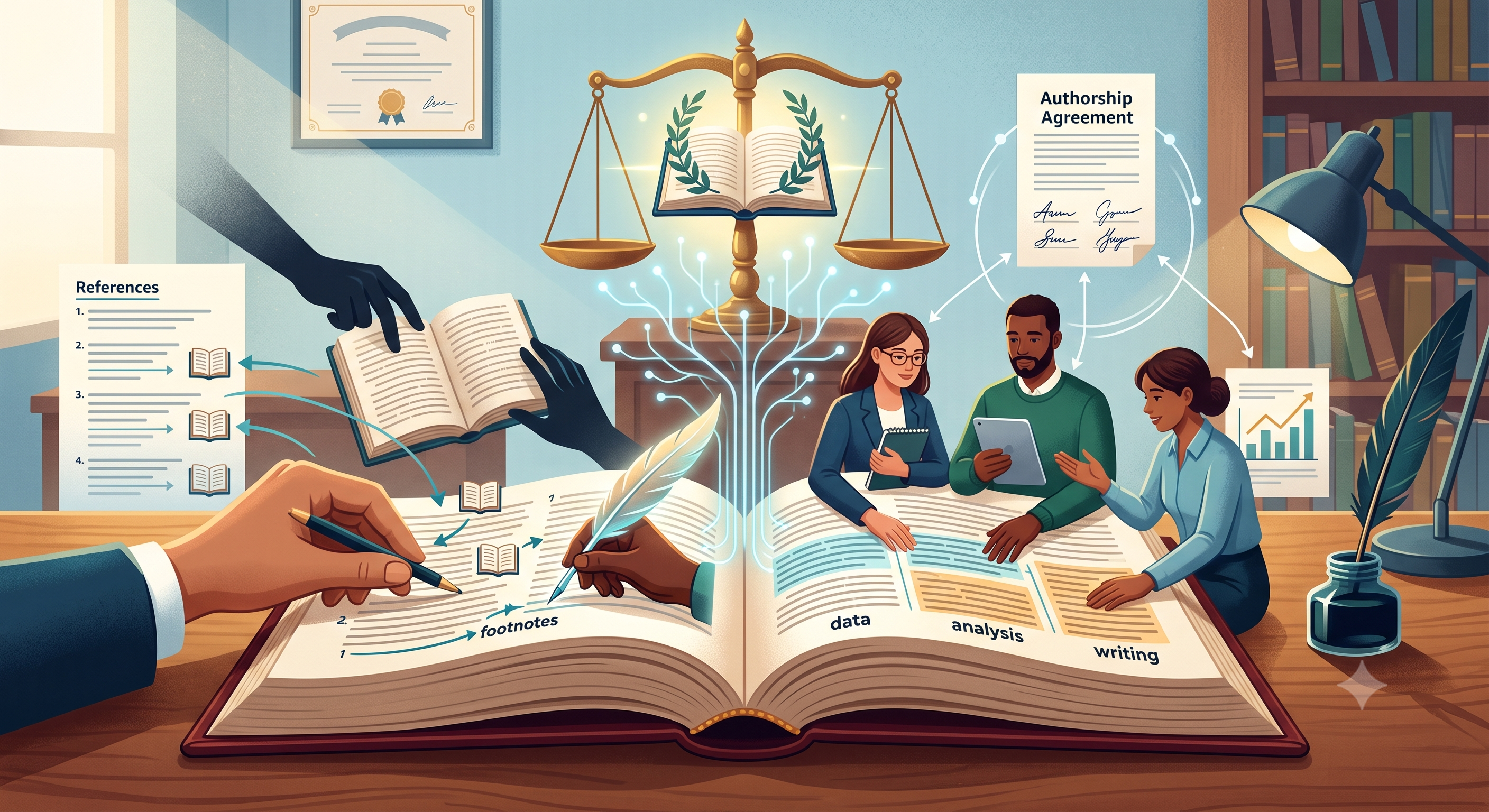
Ethics in Publishing: Avoiding Plagiarism and Authorship Disputes
Introduction
Research is built on trust, transparency, and intellectual honesty. Every published article contributes to the global body of knowledge and influences future research, policy decisions, technological innovations, and educational practices. For this reason, maintaining high ethical standards throughout the publication process is essential. Among the most significant ethical concerns in scholarly publishing are plagiarism and authorship disputes, both of which can damage professional reputations, undermine public trust, and compromise the integrity of scientific research.
Publishers, universities, funding agencies, and academic institutions expect researchers to follow established ethical principles when conducting, writing, and publishing research. Ethical publishing is not simply about avoiding misconduct; it is about ensuring fairness, accountability, transparency, and proper recognition of every individual's contribution. By understanding common ethical issues and adopting responsible research practices, authors can protect their work while contributing to a trustworthy and credible scholarly community.
What Is Publication Ethics?
Publication ethics refers to the principles and standards that guide responsible conduct in scholarly publishing. These standards promote honesty, originality, accountability, and respect for intellectual property throughout the research and publication process.
Publication ethics applies to:
- Authors
- Co-authors
- Editors
- Peer reviewers
- Publishers
- Research institutions
Adhering to ethical guidelines ensures that published research is reliable, reproducible, and worthy of public trust.
Understanding Plagiarism
Plagiarism is the act of presenting another person's words, ideas, data, images, or creative work as one's own without proper acknowledgment. It is considered one of the most serious forms of academic misconduct and can lead to manuscript rejection, article retraction, disciplinary action, or legal consequences.
Plagiarism may occur intentionally or unintentionally, but both forms can have significant academic and professional repercussions.
Types of Plagiarism
1. Direct Plagiarism
Copying text word-for-word from another source without quotation marks or appropriate citation.
2. Mosaic Plagiarism
Combining phrases or ideas from multiple sources while making only minor wording changes without proper attribution.
3. Self-Plagiarism
Reusing substantial portions of one's previously published work without disclosure or appropriate citation.
4. Idea Plagiarism
Using another researcher's concepts, theories, or methods without acknowledging the original source.
5. Data and Image Plagiarism
Presenting tables, figures, datasets, photographs, or illustrations created by others without permission or citation.
Each form of plagiarism violates academic integrity and should be avoided through careful documentation and proper referencing.
Consequences of Plagiarism
The impact of plagiarism extends far beyond a single manuscript. Potential consequences include:
- Immediate manuscript rejection.
- Retraction of published articles.
- Damage to professional reputation.
- Loss of research funding.
- Institutional disciplinary action.
- Legal and copyright issues.
- Suspension from academic programs.
- Reduced trust among collaborators and peers.
Because research credibility is difficult to rebuild after ethical violations, prevention is always the best approach.
How to Avoid Plagiarism
Researchers can minimize the risk of plagiarism by following responsible writing practices.
Cite Every Source Properly
Whenever ideas, data, methods, or words originate from another source, provide an accurate citation using the journal's required referencing style.
Write in Your Own Words
Rather than copying text, understand the original idea and explain it using your own language while still acknowledging the source.
Use Quotations Sparingly
If exact wording is essential, place the text within quotation marks and include a proper citation.
Keep Accurate Notes
Maintain organized records of all references, articles, books, datasets, and online resources consulted during your research.
Use Plagiarism Detection Software
Before submitting a manuscript, review it using plagiarism detection tools to identify accidental similarities and correct them before publication.
Understanding Authorship
Authorship is more than simply having a name listed on a publication. It signifies intellectual responsibility and accountability for the content of the research.
A legitimate author should make meaningful contributions to one or more aspects of the study, such as:
- Research conception and design.
- Data collection.
- Data analysis and interpretation.
- Manuscript writing or substantial revision.
- Approval of the final version.
- Responsibility for the integrity of the work.
Every listed author should be able to explain and defend the research presented in the publication.
Common Authorship Disputes
Authorship disagreements frequently arise when expectations are unclear or contributions are not discussed early in the research process.
Gift Authorship
Including individuals who made little or no meaningful contribution simply because of seniority, reputation, or institutional position.
Ghost Authorship
Excluding individuals who made significant contributions to the research or manuscript.
Disputes Over Author Order
Disagreements regarding the sequence of authors, particularly the first author and corresponding author positions.
Contribution Conflicts
Different perceptions regarding the level of contribution made by each collaborator.
Such disputes can strain professional relationships and delay publication if not managed appropriately.
Preventing Authorship Disputes
The most effective way to prevent disagreements is through open communication and transparency.
Researchers should:
- Discuss authorship before beginning the project.
- Define individual responsibilities clearly.
- Agree on author order early.
- Review contributions throughout the project.
- Document major research contributions.
- Obtain approval from all authors before submission.
Regular communication reduces misunderstandings and promotes collaborative trust.
Ethical Responsibilities of Authors
Authors have several important ethical obligations during the publication process.
They should:
- Report research honestly.
- Present accurate data.
- Avoid fabrication and falsification.
- Disclose conflicts of interest.
- Obtain ethical approval where required.
- Respect participant confidentiality.
- Respond professionally to reviewer comments.
- Correct significant errors if discovered after publication.
Responsible authorship strengthens confidence in scientific findings and supports the integrity of scholarly communication.
Responsibilities of Editors and Reviewers
Publication ethics extends beyond authors.
Editors should:
- Make impartial editorial decisions.
- Protect confidential information.
- Avoid conflicts of interest.
- Ensure fair peer review.
- Address ethical concerns promptly.
Peer reviewers should:
- Maintain confidentiality.
- Provide objective evaluations.
- Identify possible plagiarism or ethical concerns.
- Avoid using unpublished information for personal benefit.
Ethical collaboration among authors, editors, and reviewers ensures a trustworthy publication process.
Ethical Use of Artificial Intelligence
Artificial intelligence tools are increasingly used to assist with literature searches, language editing, and manuscript preparation. While these technologies can improve efficiency, researchers remain fully responsible for the originality, accuracy, and integrity of their work.
When using AI-assisted tools:
- Verify all generated content for accuracy.
- Do not present AI-generated text as original research findings.
- Avoid fabricating references, data, or citations.
- Follow the journal's policy regarding AI use.
- Ensure that human authors remain accountable for the manuscript.
AI should support responsible scholarship rather than replace critical thinking and scientific judgment.
Best Practices for Ethical Publishing
Researchers can maintain high ethical standards by adopting the following practices:
- Plan authorship at the beginning of the project.
- Keep detailed research records.
- Cite all sources accurately.
- Use reference management software.
- Check manuscripts for plagiarism before submission.
- Follow journal submission guidelines carefully.
- Maintain transparency in data reporting.
- Disclose funding sources and conflicts of interest.
- Preserve original research data for verification.
- Stay informed about current publication ethics guidelines.
Consistent ethical practices help build long-term credibility and professional respect.
Benefits of Ethical Publishing
Following ethical publishing principles provides numerous advantages:
- Builds academic credibility.
- Strengthens professional reputation.
- Improves trust among collaborators.
- Increases confidence in published research.
- Reduces the risk of manuscript rejection or retraction.
- Supports scientific integrity.
- Encourages responsible knowledge sharing.
- Enhances opportunities for funding and collaboration.
Ethical conduct benefits not only individual researchers but also the broader scientific community.
Conclusion
Ethics forms the foundation of credible and trustworthy academic publishing. Avoiding plagiarism and preventing authorship disputes are essential responsibilities for every researcher, regardless of career stage or discipline. By properly acknowledging the work of others, communicating openly with collaborators, maintaining accurate records, and following established ethical guidelines, authors can safeguard the integrity of their research and contribute meaningfully to scientific progress.
Ethical publishing is not merely about complying with journal requirements—it is about demonstrating honesty, accountability, and respect for the scholarly community. Researchers who consistently uphold these principles build lasting professional reputations and help ensure that scientific knowledge remains reliable, transparent, and beneficial for future generations.